
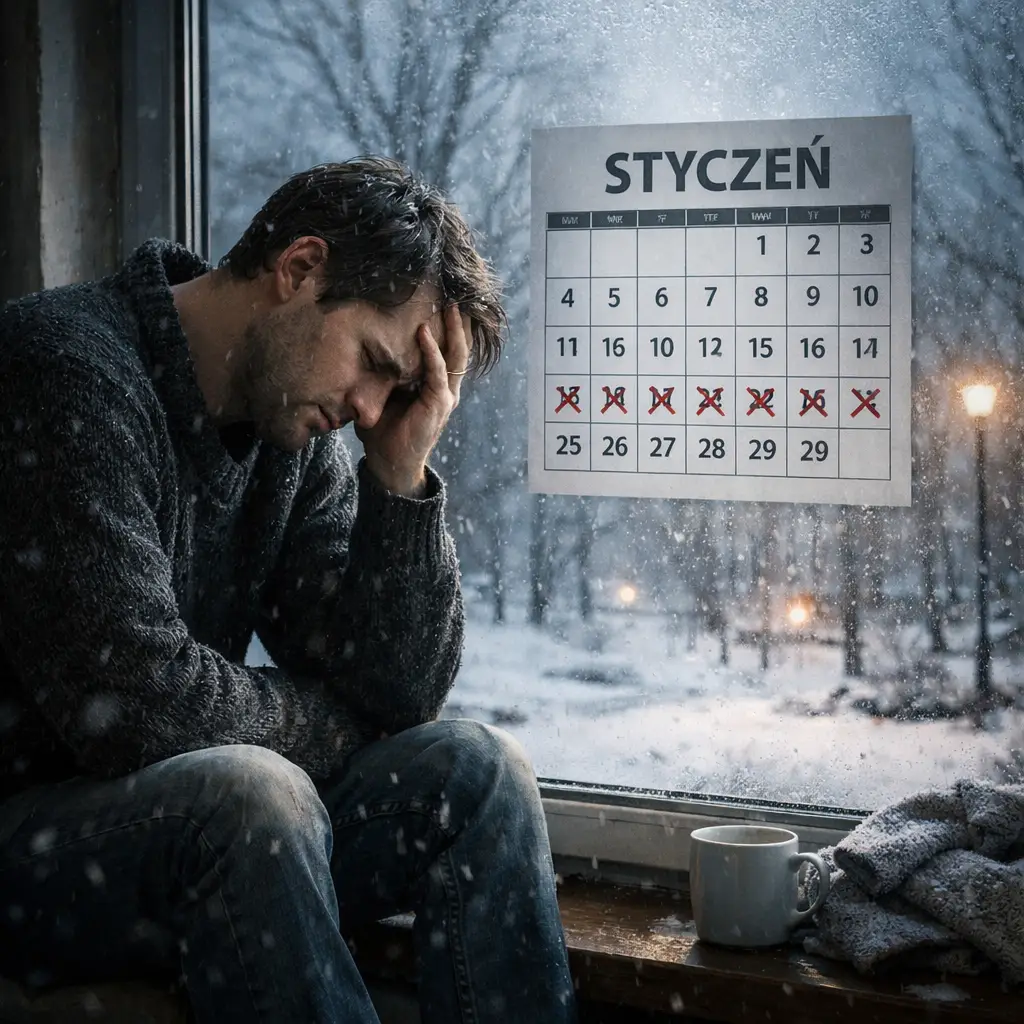
Human mental health is closely influenced by biological, environmental, and social factors. One of the most impactful yet often underestimated factors is the season of the year. In clinical practice, a noticeable increase is observed in the number of patients reporting symptoms of low mood, anxiety, insomnia, and impaired psychosocial functioning during the winter months, particularly in January.
January is often referred to as “the most difficult month of the year,” and this characterization is not without justification. Its negative impact results from the accumulation of biological, psychological, and social factors, which together create conditions conducive to a decline in mental well-being. This article discusses the key mechanisms underlying this phenomenon, based on current medical and psychological knowledge.
Reduced Daylight Exposure and Its Impact on the Brain
Circadian Rhythm and Melatonin
One of the key factors affecting mental health in winter is the significant reduction in exposure to natural sunlight. In January, days are the shortest of the year, and many individuals leave home and return after dark.
Insufficient light disrupts the functioning of the biological clock, regulated by the suprachiasmatic nucleus of the hypothalamus. As a result, the following may occur:
increased melatonin secretion,
difficulty waking up in the morning,
chronic fatigue,
reduced energy levels.
Serotonin and Mood
Sunlight plays a crucial role in the synthesis of serotonin—a neurotransmitter responsible for regulating mood, appetite, and sleep. Research indicates that serotonin levels in the brain may be significantly lower during winter, contributing to:
low mood,
irritability,
reduced motivation,
increased vulnerability to depressive symptoms.
Seasonal Affective Disorder (SAD)
Clinical Characteristics
One of the most well-documented conditions associated with deteriorating mental health in winter is Seasonal Affective Disorder (SAD). It is a form of recurrent depression in which symptoms occur regularly during specific times of the year, most commonly in autumn and winter.
Typical symptoms of SAD include:
persistent low mood,
excessive sleepiness,
increased appetite (particularly for carbohydrates),
weight gain,
social withdrawal,
impaired concentration.
January as the Peak Period
Although the first symptoms of SAD may appear as early as autumn, January often represents the period of greatest symptom severity. This is the time of the shortest daylight duration, the greatest light deficiency, and the cumulative psychological fatigue resulting from several months of functioning under unfavorable environmental conditions.
Psychological Consequences of the End of the Holiday Period
Post-Holiday Blues
For many individuals, the holiday and New Year period is associated with:
increased social interaction,
a break from daily routines,
heightened emotional expectations.
January brings an abrupt return to everyday responsibilities, which may lead to a phenomenon known as post-holiday blues—a temporary decline in mood following the end of the holiday season.
Disappointment and New Year Pressure
An additional psychological burden is the pressure related to:
New Year’s resolutions,
self-evaluation of achievements,
comparison with others.
For some individuals, this results in an intensified sense of failure, lowered self-esteem, and an increase in anxiety and depressive symptoms.
Social and Economic Factors
Financial Stress
January is often a particularly challenging month from an economic perspective. Expenses incurred during the holiday season, heating bills, and the beginning of a new budget year can generate significant financial stress, which is a recognized risk factor for mental disorders.
Social Isolation
Winter weather conditions encourage reduced outdoor activity. Short days, low temperatures, and lack of energy lead to fewer social interactions, which may exacerbate:
feelings of loneliness,
depressive symptoms,
anxiety disorders.
Reduced Physical Activity and Its Consequences
Regular physical activity has a well-documented positive effect on mental health. During winter, and particularly in January, a significant decline in physical activity is observed, resulting in:
lower endorphin levels,
poorer sleep quality,
reduced stress resilience.
Lack of physical activity therefore acts as a secondary factor that worsens mood and the ability to cope with psychological stress.
When Does January Become a Clinical Problem?
It is important to emphasize that not every decline in mood during winter constitutes a mental disorder. However, consultation with a specialist is recommended when symptoms:
persist for more than 2–3 weeks,
worsen over time,
lead to impaired occupational or family functioning,
include passive or active suicidal thoughts.
Early psychological or psychiatric intervention significantly improves prognosis.
What Helps in Winter? – Clinical Recommendations Supporting Mental Health
Prevention and treatment of winter-related mental health deterioration should be multidimensional and tailored to the individual needs of the patient. Below are the key clinical recommendations shown to be effective in reducing depressive and anxiety symptoms during winter.
Light Exposure – Phototherapy and Light Hygiene
One of the most well-documented methods of improving mood in winter is increasing exposure to light, both natural and artificial.
Recommendations include:
spending time outdoors daily in the morning (even on cloudy days),
maximizing daylight exposure indoors,
in cases of Seasonal Affective Disorder (SAD): phototherapy using a 10,000-lux light box, applied for 20–30 minutes daily, preferably in the morning.
Phototherapy is a safe, well-tolerated method and is recommended as a first-line treatment for SAD in many clinical guidelines.
Regulation of Circadian Rhythm and Sleep
Sleep disturbances are among the most common symptoms of winter-related mental health decline. Stabilizing the circadian rhythm is essential.
Recommendations include:
maintaining consistent sleep and wake times (including weekends),
avoiding daytime naps,
limiting exposure to blue light (screens) in the evening,
avoiding alcohol as a “sleep aid.”
Improved sleep quality often leads to a secondary reduction in depressive and anxiety symptoms.
Physical Activity as an Adjunctive Treatment
Regular physical activity is one of the most thoroughly studied non-pharmacological methods of improving mental health.
Clinical recommendations indicate that:
as little as 150 minutes of moderate physical activity per week can significantly improve mood,
exercise promotes endorphin release, improves sleep quality, and reduces tension,
activity should be adapted to the patient’s capabilities (walking, home exercises, yoga, swimming).
It is important to emphasize to patients that even small but regular amounts of activity have therapeutic value.
Diet and Supplementation – An Evidence-Based Approach
Although diet does not replace psychiatric treatment, it can play an important supportive role.
Commonly considered elements include:
vitamin D – deficiencies are common in winter and may correlate with low mood; supplementation should be adjusted to age and health status,
regular meals to stabilize blood glucose levels,
limiting excessive intake of simple sugars and alcohol.
Supplementation should be undertaken thoughtfully and, whenever possible, in consultation with a healthcare professional.
Psychotherapy and Psychological Support
In cases of persistent low mood, anhedonia, or anxiety, psychotherapy is one of the most effective treatment options.
Particularly recommended approaches include:
cognitive-behavioral therapy (CBT),
interventions focused on emotional regulation,
psychoeducation regarding the impact of seasonal changes on well-being.
Psychotherapy may be used as a standalone treatment or as an adjunct to pharmacotherapy.
The Importance of Prevention and Clinical Awareness
From a medical care perspective, it is particularly important to:
identify seasonal symptoms early,
normalize the patient’s experience (“winter-related mood decline is common but should not be ignored”),
encourage seeking help before symptoms worsen.
Winter prevention should be regarded as an integral part of comprehensive mental health care.
References
American Psychiatric Association. Diagnostic and Statistical Manual of Mental Disorders (DSM-5). 5th ed. Washington, DC: APA; 2013.
Rosenthal N.E., Sack D.A., Gillin J.C., et al. Seasonal affective disorder: A description of the syndrome and preliminary findings with light therapy. Archives of General Psychiatry. 1984;41(1):72–80.
Lam R.W., Levitt A.J., Levitan R.D., et al. Efficacy of bright light treatment, fluoxetine, and the combination in patients with nonseasonal major depressive disorder. American Journal of Psychiatry. 2006;163(5):805–812.
Magnusson A., Boivin D. Seasonal affective disorder: An overview. Chronobiology International. 2003;20(2):189–207.
Golden R.N., Gaynes B.N., Ekstrom R.D., et al. The efficacy of light therapy in the treatment of mood disorders: A review and meta-analysis. American Journal of Psychiatry. 2005;162(4):656–662.
Wirz-Justice A., Benedetti F., Terman M. Chronotherapeutics for Affective Disorders. 2nd ed. Basel: Karger; 2013.
World Health Organization. Depression and Other Common Mental Disorders: Global Health Estimates. Geneva: WHO; 2017.