
A sudden, extremely intense joint pain that often occurs in the middle of the night and can wake a person from sleep. Redness, swelling, and extreme tenderness to touch may become so severe that even the weight of a light bedsheet can cause significant discomfort. This is how a gout attack most commonly begins – a disease historically known as the “disease of kings,” which today represents an increasingly common public health problem.
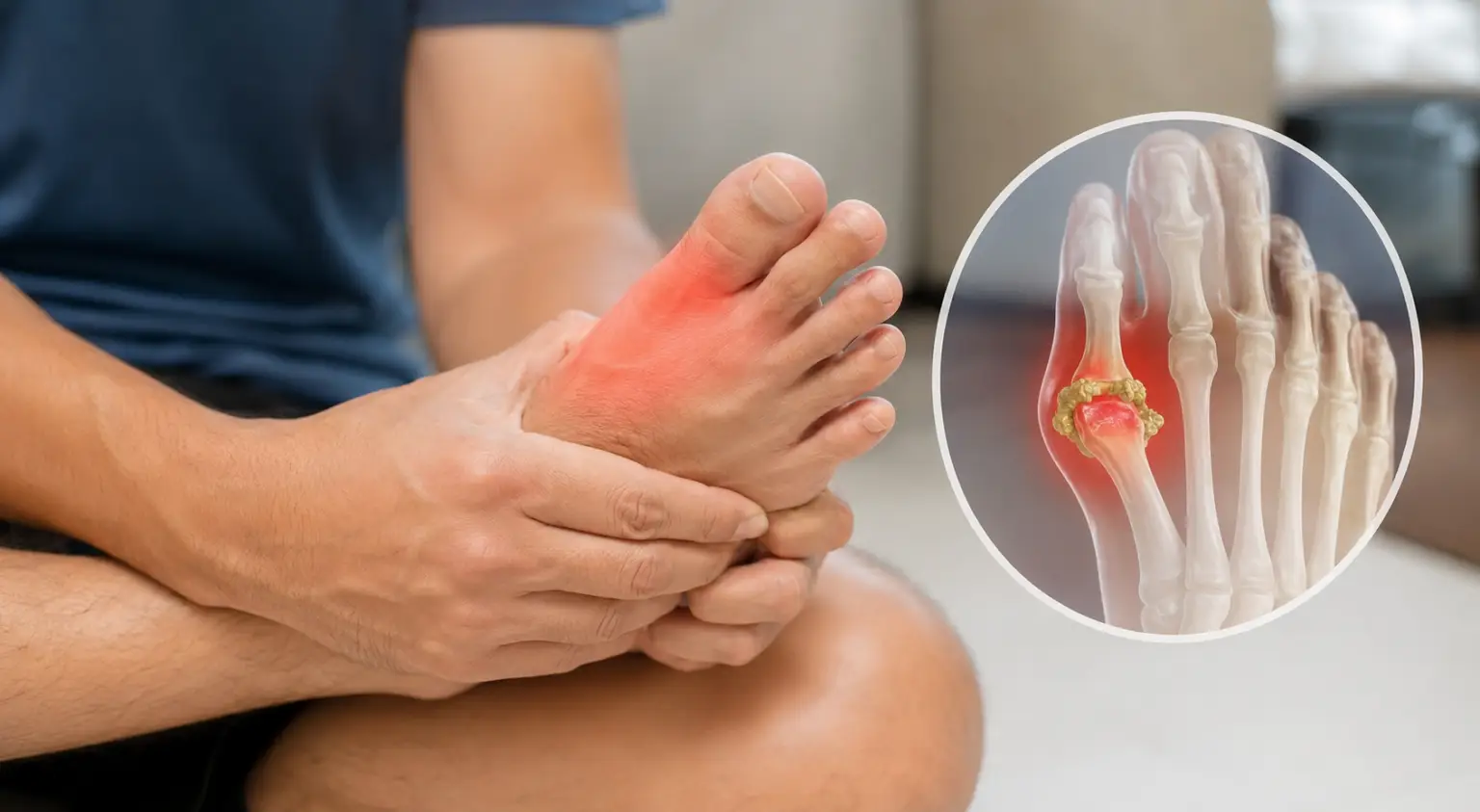
Gout is the most common form of inflammatory arthritis among adult men, and the number of affected individuals is steadily increasing worldwide. This trend is influenced by factors such as population aging, rising rates of obesity, metabolic syndrome, and chronic kidney disease. How does gout develop, why do attacks occur suddenly, and what can be done to reduce the risk of recurrence?
Gout is a chronic inflammatory disease caused by the deposition of monosodium urate crystals in the joints and surrounding tissues. Uric acid, the final product of purine metabolism, is naturally produced in the body and is primarily eliminated by the kidneys. When its concentration in the blood becomes too high, a condition known as hyperuricemia develops, which can lead to the formation of monosodium urate crystals.
It is important to emphasize that not every person with elevated uric acid levels will develop gout. Hyperuricemia is much more common than gout itself; however, it remains the most significant risk factor for developing gout attacks.
The most characteristic symptom of the disease is an acute attack of joint inflammation. In its classic form, it affects the joint at the base of the big toe, but it may also involve the ankle, knee, wrist, or elbow joints. The pain develops rapidly, usually reaches its maximum intensity within 6-12 hours, and is often described by patients as one of the worst pains they have ever experienced.
The first attacks very often occur during the night or early morning hours. This is partly due to the decrease in temperature of the extremities during sleep, which promotes the crystallization of monosodium urate. Nocturnal dehydration may also contribute by increasing the concentration of uric acid in the blood.
During an attack, the affected joint becomes swollen, red, warm, and extremely sensitive to touch. In some patients, even the weight of a bedsheet may be unbearable. Symptoms usually resolve within a few days or weeks; however, the absence of pain does not mean that the disease has disappeared.
Untreated gout can lead to increasingly frequent attacks, chronic joint inflammation, and the development of tophi, which are deposits of monosodium urate crystals that commonly accumulate around the fingers, elbows, ear cartilage, and the Achilles tendon.
Growing evidence suggests that gout is not merely a joint disease. Hyperuricemia is frequently associated with hypertension, obesity, type 2 diabetes, metabolic syndrome, and chronic kidney disease. Numerous observational studies have also demonstrated an association between elevated uric acid levels and an increased risk of cardiovascular diseases.
The most important risk factors include genetic predisposition, excessive body weight, a diet rich in purines, regular alcohol consumption-especially beer-and certain medications, particularly diuretics used in the treatment of hypertension.
For many years, gout was considered mainly a consequence of consuming large amounts of red meat and alcohol. It is now understood that the mechanism of the disease is more complex. High fructose intake, especially from sugar-sweetened beverages and highly processed foods, may also play an important role because it increases uric acid production in the body.
The diagnosis of gout is based on characteristic clinical symptoms, laboratory findings, and, when necessary, examination of synovial fluid. The diagnostic gold standard remains the identification of monosodium urate crystals in the collected joint fluid.
Treatment of an acute attack aims to rapidly control pain and inflammation. Depending on the clinical situation, treatment may include nonsteroidal anti-inflammatory drugs (NSAIDs), colchicine, or glucocorticosteroids.
Long-term treatment is equally important and aims to reduce uric acid levels and prevent future attacks. The most commonly used medication is allopurinol, while febuxostat may be used in selected cases. Current recommendations from EULAR and the American College of Rheumatology emphasize a “treat-to-target” strategy, meaning treatment aimed at achieving a specific uric acid goal. For most patients, maintaining a serum uric acid level below 6 mg/dL (360 µmol/L) is recommended, while patients with more severe disease, such as those with tophi, often require levels below 5 mg/dL (300 µmol/L).
Pharmacological treatment should be complemented by lifestyle modifications. Weight reduction in overweight individuals, limiting alcohol consumption, adequate hydration, regular physical activity, and a diet based mainly on minimally processed foods can significantly reduce the risk of future attacks.
Gout is a chronic metabolic disease whose hallmark is sudden and extremely painful attacks of joint inflammation. Although an attack may resolve spontaneously, this does not mean that the underlying disease has been cured. Modern medicine allows effective control of gout through appropriate treatment, monitoring of uric acid levels, and lifestyle modification.
Patient FAQ
Is beer more harmful than other types of alcohol for gout?
Yes. Beer contains purines derived from brewer’s yeast and is one of the best-documented dietary factors associated with an increased risk of gout attacks.
Is gout hereditary?
Yes. Genetic predisposition plays a significant role, particularly regarding the kidneys’ ability to eliminate uric acid efficiently.
Does applying ice help during a gout attack?
Yes. Short-term application of cold packs may reduce pain and swelling. However, ice should not be applied directly to the skin to avoid frost injury.
Can women develop gout?
Yes. Gout is more common in men, but the risk in women increases after menopause due to hormonal changes.
Can gout lead to permanent joint damage?
Yes. Long-standing, poorly controlled gout may result in chronic inflammation, joint deformities, and reduced joint mobility.
References:
European Alliance of Associations for Rheumatology (EULAR). Recommendations for the Management of Gout.
FitzGerald JD et al. 2020 American College of Rheumatology Guideline for the Management of Gout. Arthritis Care & Research.
Dalbeth N, Merriman TR, Stamp LK. Gout. The Lancet. 2016.
Richette P, Bardin T. Gout. The Lancet. 2010.
Kuo CF et al. Global epidemiology of gout: prevalence, incidence and risk factors. Nature Reviews Rheumatology. 2015.
Choi HK, Atkinson K, Karlson EW et al. Alcohol intake and risk of incident gout in men. The Lancet. 2004.
Neogi T. Clinical practice. Gout. New England Journal of Medicine. 2011.
Kidney Disease: Improving Global Outcomes (KDIGO). Clinical Practice Guidelines.