
Fatigue, low energy, difficulty concentrating, shortness of breath when climbing stairs, increased sleepiness, or excessive hair loss are symptoms that many people attribute to stress, overwork, or vitamin deficiencies. Increasingly, however, these symptoms turn out to be caused by iron deficiency that has been developing for months before anemia becomes apparent on a complete blood count (CBC). This is why many people undergoing routine blood tests discover that their hemoglobin level is normal, while their ferritin level is very low. For many patients, this comes as a surprise. If the blood count does not show anemia, does it really mean the body is lacking iron? Does low ferritin always require treatment? Why do some doctors reassure patients while others recommend iron supplementation?
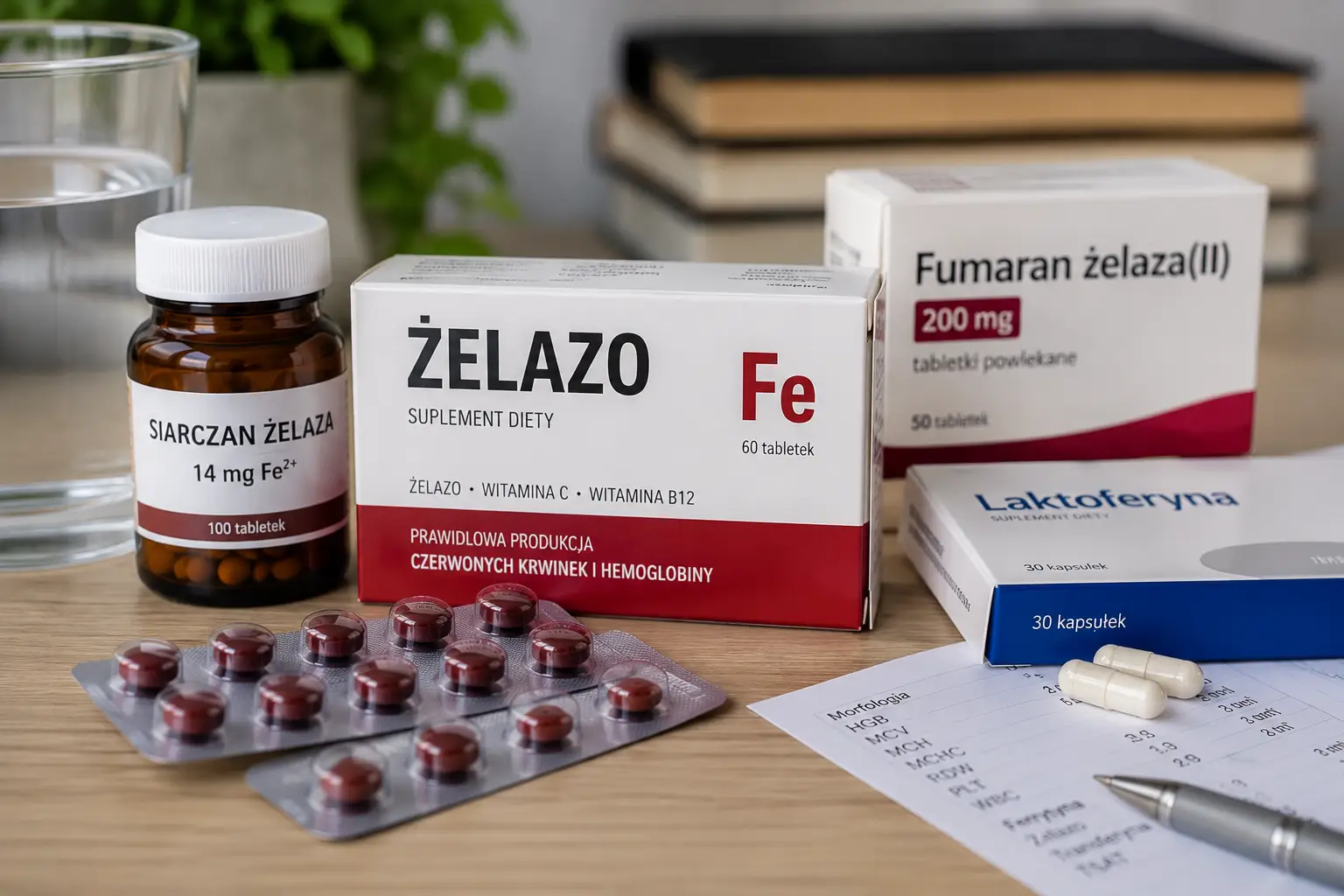
There is a great deal of conflicting information available online. Some sources claim that a ferritin level of 15–20 µg/L is perfectly adequate, while others argue that it should be at least 70 or even 100 µg/L. At the same time, lactoferrin is increasingly promoted as a better-tolerated and more effective alternative to iron supplements. To understand why these opinions differ, it is important to first explain what ferritin actually is and why it should not be confused with the level of iron circulating in the blood.
Iron is one of the body’s most important micronutrients. Most people associate it primarily with hemoglobin, the protein responsible for transporting oxygen, but its role extends far beyond that. Iron is involved in energy production, proper muscle function, immune system activity, and numerous enzymatic reactions that occur every day. The body does not store free iron because excessive amounts could damage cells. Instead, it stores iron mainly in the form of ferritin. Ferritin can be thought of as the body’s iron storage protein, providing a reserve that can be used whenever dietary iron intake becomes insufficient. This is why low ferritin is often the earliest sign of developing iron deficiency. First, iron stores become depleted; next, the amount of iron available for red blood cell production decreases; and only later does hemoglobin begin to fall. In practice, this means that a person may have a completely normal blood count while already having a significant iron deficiency.
This is one of the most common sources of misunderstanding. Many patients are told that if their hemoglobin is normal, there is nothing to worry about. This is not always true. In some individuals, iron deficiency without anemia can already cause symptoms, although they are usually milder than those seen in established anemia. The most common complaints include persistent fatigue, reduced physical performance, difficulty concentrating, headaches, weakness, excessive sleepiness, and palpitations during physical activity. Some people also experience cold hands and feet, brittle nails, or worsening skin condition. Hair loss is another frequently discussed symptom. Indeed, in some patients, low ferritin may coexist with increased telogen hair shedding. However, this does not mean that everyone with thinning hair has iron deficiency or that raising ferritin to a specific target level will automatically solve the problem. Hair loss may also be associated with thyroid disorders, severe stress, recent infections, pregnancy, protein deficiency, zinc deficiency, or vitamin B12 deficiency. For this reason, treatment should always begin with identifying the actual underlying cause.
Interpreting ferritin levels is more complex than many people realize. Very low ferritin levels almost always indicate depleted iron stores, but there is no single value that can be considered ideal for everyone. Current clinical guidelines indicate that, in individuals without inflammation, a ferritin level below 15–30 µg/L strongly suggests iron deficiency.
However, it is important to remember that ferritin is an acute-phase protein. This means its concentration increases during infections, chronic inflammatory conditions, liver disease, obesity, and certain cancers. In these situations, ferritin levels may appear normal or even elevated despite inadequate iron stores. For this reason, physicians never interpret ferritin in isolation. Other laboratory tests—including a complete blood count, red blood cell indices, C-reactive protein (CRP), and transferrin saturation—also play an important role in determining whether the body truly has sufficient iron available.
Identifying the underlying cause of iron deficiency is equally important. Simply taking iron supplements without understanding why iron stores became depleted often leads to only temporary improvement.
In premenopausal women, the most common cause is heavy menstrual bleeding. Many women consider their periods “normal” because they have always been heavy, yet excessive menstrual blood loss can gradually deplete the body’s iron stores. Pregnancy is another common cause, as the body’s iron requirements increase substantially during this time.
Iron deficiency may also result from a diet low in well-absorbed sources of iron, particularly if the diet is poorly balanced. However, this does not mean that every vegetarian or vegan diet inevitably causes iron deficiency. A properly planned plant-based diet can provide sufficient iron, although it requires greater attention to nutritional balance.
Much greater caution is required when iron deficiency occurs in men and postmenopausal women. In these groups, iron deficiency is far more likely to be associated with chronic blood loss from the gastrointestinal tract. Possible causes include peptic ulcer disease, colorectal polyps, inflammatory bowel disease, long-term use of nonsteroidal anti-inflammatory drugs (NSAIDs), and gastrointestinal cancers. Therefore, simply prescribing an iron supplement without further investigation may delay the diagnosis of a serious underlying condition.
Iron deficiency may also develop in people with celiac disease, Helicobacter pylori infection, after bariatric surgery, or during long-term treatment with medications that reduce stomach acid production, as all of these conditions can impair iron absorption.
In clinical practice, many people rely solely on a serum iron test and attempt to assess their iron status based on that result alone. This is a mistake. Serum iron levels fluctuate throughout the day and are influenced by recent meals, supplementation, and many other factors. Ferritin, interpreted together with a complete blood count and—when appropriate—transferrin, total iron-binding capacity (TIBC), and transferrin saturation, provides much greater diagnostic value. Only by evaluating the full set of results can a physician determine whether iron deficiency is truly present.
Treatment depends primarily on the underlying cause and the severity of the deficiency. In most cases, oral iron supplements are the first-line treatment. However, not all iron supplements contain the same amount of elemental iron. It is the amount of elemental iron—not the total weight of the tablet—that determines its therapeutic effectiveness.
For many years, patients were advised to take iron supplements two or three times a day. More recent studies, however, have shown that taking iron once daily—or even every other day—can be equally effective and is often better tolerated. This is due to the action of hepcidin, a hormone that regulates iron absorption. Taking iron too frequently may paradoxically reduce its absorption while increasing the risk of side effects.
The most commonly reported side effects of iron supplementation include nausea, abdominal discomfort, constipation, diarrhea, and a metallic taste in the mouth. However, these side effects do not necessarily mean that treatment should be stopped. In many cases, switching to a different formulation, reducing the dose, increasing the interval between doses, or taking the tablet with a small meal is sufficient to improve tolerability.
Iron is absorbed most efficiently on an empty stomach. However, if taking it this way causes significant discomfort and leads the patient to discontinue treatment altogether, a slight reduction in absorption is far less problematic than not taking the supplement at all. It is also important to remember that coffee, tea, calcium supplements, and certain medications can reduce iron absorption. Therefore, it is advisable to leave an appropriate time interval between taking these products and an iron supplement.
Some patients require intravenous (IV) iron therapy. This is mainly recommended for individuals who cannot tolerate oral iron preparations, have significant malabsorption disorders, active inflammatory bowel disease, chronic kidney disease, or need rapid replenishment of iron stores. Intravenous iron should always be administered under medical supervision and is not considered the first-line treatment for most patients.
In recent years, lactoferrin has also gained enormous popularity. Advertisements often present it as a modern alternative to conventional iron supplements, but the reality is more complex. Lactoferrin is a naturally occurring iron-binding protein found in milk, saliva, tears, and other body fluids. It plays a role in the immune response and influences iron metabolism. However, unlike conventional iron supplements, it does not provide the body with substantial amounts of iron.
Early studies produced promising results, particularly in pregnant women, suggesting that lactoferrin could improve blood parameters while causing fewer side effects than traditional iron preparations. More recent research, however, has been considerably more cautious. The largest studies have shown that lactoferrin alone is less effective than conventional oral iron supplements in the treatment of iron deficiency anemia. This means that lactoferrin may be considered as an adjunct to treatment or as an option in selected situations, but based on current evidence, it should not be regarded as a full replacement for standard iron supplementation.
Ultimately, the most important aspect of treatment is not choosing a particular supplement but identifying and addressing the underlying cause of the iron deficiency. Simply improving laboratory values will not solve the problem if chronic blood loss or impaired iron absorption continues.
For this reason, low ferritin should neither be ignored nor treated solely on the basis of supplement advertisements. In most cases, an appropriate diagnostic evaluation can identify the underlying cause, and properly managed iron supplementation can effectively restore iron stores while reducing the risk of recurrence.
It is also important to remember that fatigue, weakness, and hair loss are not always caused by iron deficiency. Laboratory results should always be interpreted in the context of the patient’s symptoms, coexisting medical conditions, and the overall clinical picture—not on the basis of a single number printed next to the word ferritin.
Patient FAQ
Does coffee lower iron levels?
No. Coffee does not lower the level of iron in your blood. However, when consumed together with an iron supplement or an iron-rich meal, it can reduce iron absorption. It is best to wait at least 1–2 hours between drinking coffee and taking an iron supplement.
Which foods contain the most iron?
The best-absorbed form of iron is found in red meat, organ meats, and fish. Plant-based foods also contain iron, but the body absorbs it much less efficiently.
Does vitamin C improve iron absorption?
Yes. Vitamin C enhances iron absorption, which is why iron supplements are often recommended to be taken with water or a vitamin C-containing beverage.
Can ferritin levels decrease again after stopping iron supplements?
Yes. If the underlying cause of the iron deficiency is not addressed, iron stores may become depleted again over time.
Should ferritin be tested routinely?
In healthy individuals, ferritin is not typically measured as part of routine screening. However, a healthcare provider may recommend testing if there are symptoms suggestive of iron deficiency or risk factors that increase the likelihood of developing it.
References:
World Health Organization (WHO). Use of ferritin concentrations to assess iron status in individuals and populations. Geneva: WHO; 2020.
Camaschella C. Iron Deficiency. N Engl J Med. 2015;372(19):1832–1843.
Camaschella C. Iron deficiency without anemia: a diagnosis that matters. Clin Case Rep. 2021;9(2):521–522.
Ko CW, Siddique SM, Patel A, et al. AGA Clinical Practice Update on Management of Iron Deficiency Anemia: Expert Review. Gastroenterology. 2024.
Snook J, Bhala N, Beales ILP, et al. British Society of Gastroenterology guidelines for the management of iron deficiency anaemia in adults. Gut. 2021;70(11):2030–2051.
Short MW, Domagalski JE. Iron Deficiency Anemia: Evaluation and Management. Am Fam Physician. 2013;87(2):98–104.
Pasricha SR, Tye-Din J, Muckenthaler MU, Swinkels DW. Iron deficiency. Lancet. 2021;397(10270):233–248.
Moretti D, Goede JS, Zeder C, et al. Oral iron supplements increase hepcidin and decrease iron absorption from daily or twice-daily doses in iron-depleted young women. Blood. 2015;126(17):1981–1989.
Stoffel NU, Cercamondi CI, Brittenham G, et al. Iron absorption from supplements is greater with alternate day than with consecutive day dosing in iron-deficient anemic women. Lancet Haematol. 2017;4(11):e524–e533.
Wang B, Timilsena YP, Blanch E, Adhikari B. Lactoferrin: Structure, Function, Denaturation and Digestion. Crit Rev Food Sci Nutr. 2019;59(4):580–596.