
At home, the child eagerly talks about their day, laughs, asks questions, and communicates freely with close family members. At preschool or school, however, they suddenly become silent. They do not answer the teacher, do not speak to their peers, and avoid eye contact. For many parents, this behavior is a source of concern, while others often mistakenly interpret it as shyness, poor manners, or stubbornness. In reality, the cause may be selective mutism – a childhood anxiety disorder that requires proper diagnosis and treatment.
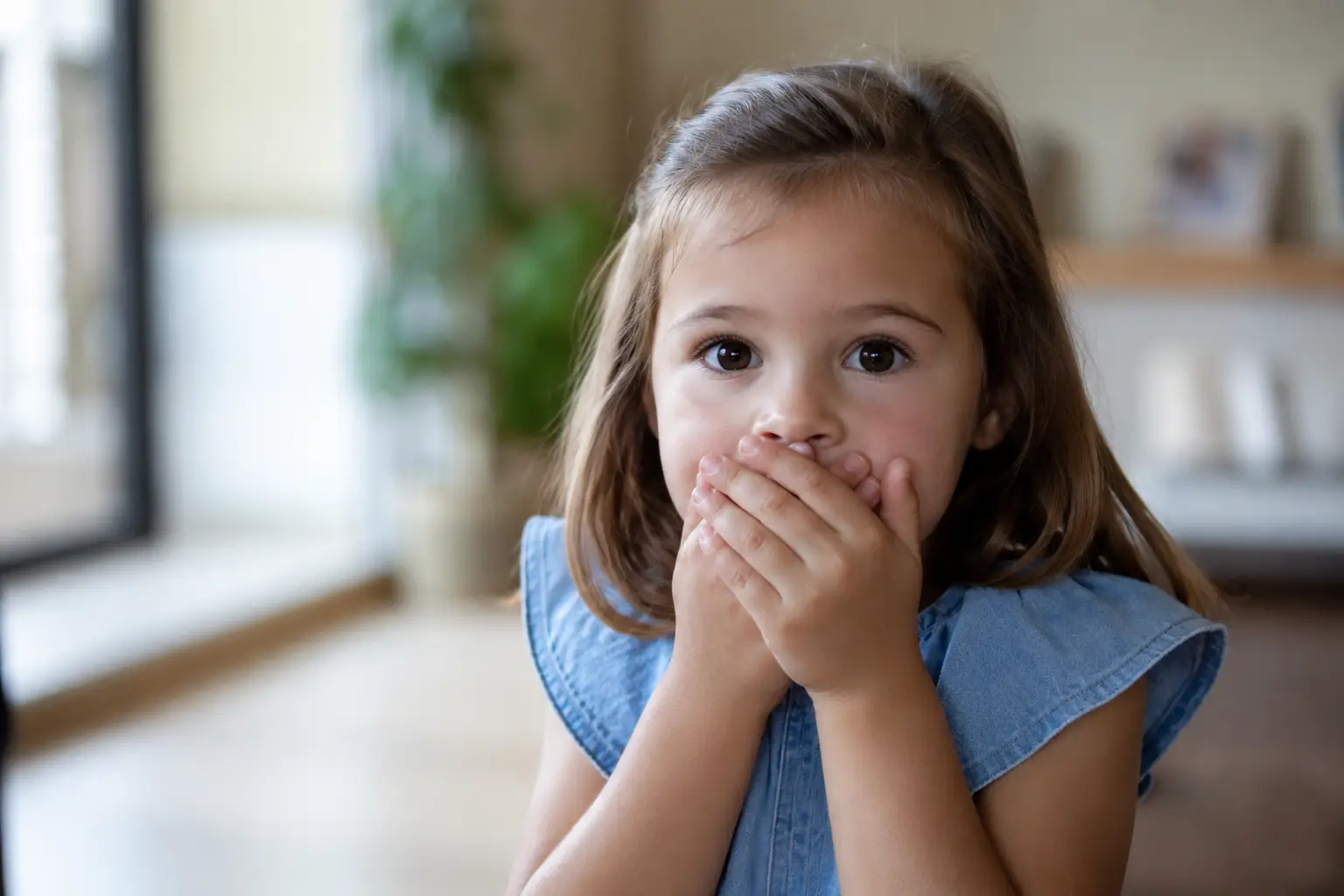
Selective mutism is a childhood anxiety disorder in which a child is able to speak normally in certain situations, most commonly at home, but consistently remains silent in specific settings or in the presence of particular people. The problem is not caused by an inability to speak or by a lack of language skills. The child wants to speak, but intense anxiety prevents them from producing speech.
According to the DSM-5 diagnostic criteria, selective mutism is diagnosed when the difficulty persists for at least one month, is not limited to the first few weeks of adjusting to preschool or school, and significantly interferes with academic performance, social relationships, or everyday functioning.
Selective mutism is estimated to affect approximately 0.3-1% of children, most commonly between the ages of 3 and 6 years. It is diagnosed more frequently in girls than in boys. The first symptoms usually become most noticeable after a child starts preschool or school, when communication with people outside the immediate family is expected.
Interestingly, selective mutism was long considered an extremely rare disorder. Today, it is known that many cases remain undiagnosed or are mistakenly interpreted as extreme shyness, disobedience, or behavioral problems. As a result, many children are referred to specialists only several years after the first symptoms appear, which may prolong treatment and negatively affect social functioning.
For many years, selective mutism was believed to be primarily a communication disorder. It is now understood that its underlying mechanism is severe social anxiety. The child is not consciously refusing to speak. In stressful situations, the body reacts as if facing a threat-muscle tension increases, heart rate accelerates, a feeling of being “frozen” occurs, and even saying a simple word becomes extremely difficult.
Recent neurobiological studies suggest that children with selective mutism show increased activity in brain structures responsible for processing fear, particularly the amygdala. This leads to an exaggerated anxiety response during social situations. Although the child understands that speaking with a teacher or classmates is not objectively dangerous, their nervous system reacts as though they are facing a real threat.
It is important to emphasize that children with selective mutism often communicate in other ways. They may point to objects, nod, gesture, write, smile, or whisper to one trusted person. However, this does not mean the disorder is less severe. For these children, attempting to speak in an anxiety-provoking situation may require tremendous effort.
Selective mutism is very often mistaken for shyness. However, there is a fundamental difference between the two. A shy child usually needs more time to establish contact but gradually begins speaking with teachers and peers. In selective mutism, the silence persists over time and significantly interferes with the child’s functioning.
Not every child with selective mutism appears frightened. Some seem calm or even indifferent. In reality, their level of emotional tension may be extremely high. Anxiety is not always visible externally.
The causes of selective mutism are complex. Genetic predisposition, a child’s temperament, and environmental factors all play a role. The risk may be higher in children who are particularly sensitive to unfamiliar social situations, especially after starting preschool or school. However, this does not mean that the disorder is caused by parenting mistakes.
Selective mutism rarely occurs in isolation. Research indicates that many affected children also experience other anxiety disorders, particularly social anxiety disorder. Some are additionally diagnosed with neurodevelopmental conditions such as ADHD or autism spectrum disorder. Nevertheless, not every child with selective mutism has additional diagnoses. This is why a comprehensive assessment conducted by an experienced multidisciplinary team is essential.
Diagnosis is based primarily on a detailed interview with the parents and observation of the child’s behavior across different environments. A child and adolescent psychiatrist considers how long the symptoms have persisted, the situations in which the child speaks or remains silent, and the impact of the disorder on daily functioning. A psychologist, educational specialist, and speech-language pathologist are also frequently involved in the diagnostic process. When necessary, hearing impairment, language development disorders, neurological diseases, and other psychiatric conditions should be excluded.
One of the biggest mistakes is putting pressure on the child to speak. Repeatedly saying things such as “Say hello,” “Why aren’t you answering?” or “You talk normally at home” usually increases anxiety and may worsen the symptoms.
Parents should also avoid answering on behalf of the child during every conversation or excessively protecting them from social situations. Far better outcomes are achieved by creating a calm and predictable environment and reinforcing every attempt at communication, no matter how small. Building the child’s sense of competence and self-efficacy is one of the key elements of successful treatment.
Preschool and school also play an extremely important role in the therapeutic process. Teachers should be informed about the child’s diagnosis and understand the nature of the disorder. Rather than calling on the child to answer questions in front of the entire class or drawing attention to their silence, it is far more beneficial to gradually build a sense of safety and allow communication in ways appropriate to the child’s current abilities.
The best-supported treatment for selective mutism is cognitive behavioral therapy (CBT). Therapy includes gradual exposure to anxiety-provoking social situations, learning emotional regulation strategies, and developing communication skills. Close collaboration among parents, teachers, and therapists is essential for successful treatment.
In more severe cases, particularly when selective mutism coexists with significant social anxiety or other anxiety disorders, a psychiatrist may consider pharmacological treatment. The most commonly prescribed medications are selective serotonin reuptake inhibitors (SSRIs). However, medication does not replace psychotherapy and is generally used as an adjunct to it.
Research shows that the prognosis for selective mutism is very good, especially when the condition is recognized early and treatment begins during the preschool years. The longer symptoms persist without appropriate intervention, the greater the risk of long-term social difficulties, academic problems, and the development of additional anxiety disorders.
Selective mutism can significantly affect a child’s emotional development, education, and social relationships. Fortunately, it is a condition for which early intervention is highly effective. The sooner the disorder is recognized, the greater the chance of gradually overcoming communication difficulties and supporting healthy social and emotional development. Persistent silence outside the home should never be dismissed as simple shyness. If there are concerns, consultation with a child and adolescent psychiatrist or a psychologist experienced in anxiety disorders is strongly recommended.
Patient FAQ
Can selective mutism appear suddenly?
Yes. Symptoms often become noticeable after a child starts preschool or school, or following another event associated with increased social stress.
Can a child with selective mutism laugh and play with peers?
Yes. Many children actively participate in play using gestures, facial expressions, and nonverbal communication while still being unable to speak freely.
Does selective mutism affect learning to read and write?
Not directly. However, it may interfere with classroom participation, answering questions, or engaging in activities that require speaking.
Can selective mutism cause problems with eating outside the home?
Yes. Some children experience such intense anxiety that they avoid eating or drinking at preschool, school, or in the presence of unfamiliar people.
Can selective mutism return after successful treatment?
Yes. Symptoms may temporarily reappear during periods of significant stress. However, in most children who have completed effective therapy, any recurrence is typically much milder than before.
References:
American Psychiatric Association. Diagnostic and Statistical Manual of Mental Disorders (DSM-5-TR).
World Health Organization. International Classification of Diseases 11th Revision (ICD-11).
American Academy of Child and Adolescent Psychiatry (AACAP). Practice Parameter for the Assessment and Treatment of Children and Adolescents With Anxiety Disorders.
Kotrba K. Selective Mutism: An Assessment and Intervention Guide for Therapists, Educators & Parents.
Selective Mutism Association. Clinical Resources and Practice Recommendations.
Muris P, Ollendick TH. Children Who Are Anxious in Silence: A Review on Selective Mutism. Clinical Child and Family Psychology Review.
Bergman RL, Piacentini J, McCracken JT. Prevalence and Description of Selective Mutism in a School-Based Sample. Journal of the American Academy of Child & Adolescent Psychiatry.