
Creatine is mainly associated with the gym and building muscle mass, but it is one of the most well-researched substances in medicine and human physiology.
More and more studies show that it may affect not only strength, but also memory, concentration, mood, and even brain development—including during pregnancy.
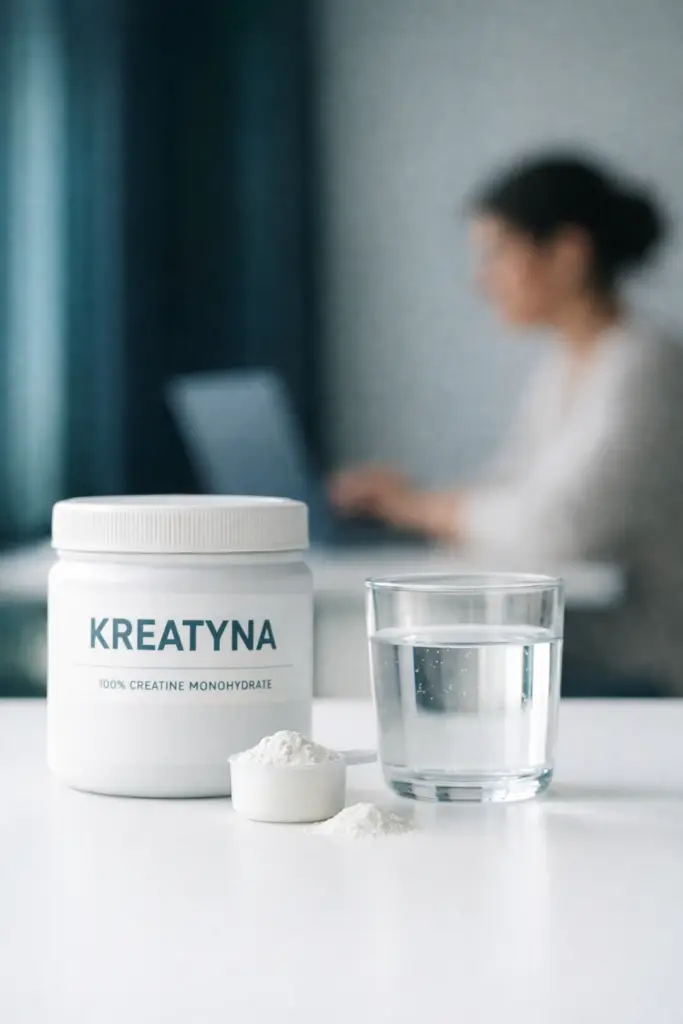
Creatine is a natural chemical compound present in the human body, synthesized mainly in the liver, kidneys, and pancreas from the amino acids arginine, glycine, and methionine. About 95% of its stores are found in muscles, but a significant portion is also present in the brain. Its primary function is participation in the production of ATP—the main energy carrier in cells. In practice, this means creatine acts as an “energy reservoir” that allows cells to respond quickly during periods of increased demand.
This is why creatine has been used in sports for years—it improves strength, performance, and recovery. However, the same mechanism also works in the brain. Neurons are among the most energy-demanding cells in the body, and their proper function depends on a constant supply of energy. In situations such as sleep deprivation, chronic stress, or intense mental work, this demand increases significantly—and this is where creatine may play a supportive role.
It is one of the few supplements that works both on muscles and the brain.
Scientific studies indicate that creatine supplementation may improve working memory, concentration, and information processing speed, especially under conditions of fatigue. In practice, this means it may support the functioning of a student before an exam, someone doing intellectual work, or a person who is sleep-deprived. That is why after a sleepless night, logical thinking ability declines—and creatine may partially compensate for this brain energy deficit.
Interestingly, people on plant-based diets often have lower creatine levels, as its main dietary sources are animal products. In such cases, supplementation may bring particularly noticeable effects—not only in physical performance but also in cognitive functions.
More and more research also focuses on creatine’s impact on mental health. Preliminary findings suggest that it may support the treatment of depression as an adjunct therapy. This mechanism is most likely related to improved brain energy metabolism and effects on neurotransmitters. Simply put—a brain with better access to energy may function more steadily.
Creatine also shows potential neuroprotective effects. It may protect nerve cells from oxidative stress, support mitochondrial function, and increase the brain’s resistance to damage. Experimental studies are analyzing its role in situations such as hypoxia, brain injuries, or neurodegenerative diseases—areas that were not part of mainstream supplementation research just a few years ago.
An interesting fact is that in research models, creatine has shown protective effects on the brain under low-oxygen conditions, which may be relevant in the future for emergency medicine and neurology.
A particularly interesting area of research is the role of creatine during pregnancy. Animal studies suggest that maternal supplementation may protect the developing fetal brain from the effects of perinatal hypoxia and support organ development. Preliminary findings also indicate potential protective effects on the kidneys and muscles of the newborn. However, it should be emphasized that large clinical trials in humans are still lacking, so creatine supplementation during pregnancy is not currently standardly recommended and should always be consulted with a physician.
It is also worth noting that creatine is not a supplement only for athletes or men. It may be important for women’s health—from improving cognitive function, through supporting energy levels, to potentially influencing mood. Hormonal differences may mean that in some aspects, women respond particularly well to creatine, especially in the context of brain function.
In terms of safety, creatine—especially in the form of monohydrate—is one of the best-researched supplementation substances. In healthy individuals using doses of 3–5 g per day, it is considered safe. Current scientific data do not confirm harmful effects on the kidneys or liver in healthy individuals. Contrary to popular myths, creatine does not cause pathological water retention—it only increases cellular hydration, which is a natural and physiological effect.
In summary, creatine is much more than a supplement for those who train. It is a compound of fundamental importance for body function that supports energy production, may improve cognitive functions, influence mood, and potentially protect the nervous system. Its use now goes far beyond sports and increasingly includes areas related to brain health and medicine.
Patient FAQ
Can you “feel” creatine working on the brain, not just muscles?
Some people report improved concentration, “mental clarity,” or reduced mental fatigue, but the effect is not as noticeable as, for example, caffeine—it works more subtly and over the long term.
Why do some people feel the effects of creatine and others do not?
This may depend on baseline creatine levels in the body—people on plant-based diets or those who are fatigued often experience greater benefits than those with a well-balanced diet.
Does creatine affect stress levels or mental resilience?
Indirectly, yes—by improving energy availability in the brain, it may support stability under stress, although it is not a typical “anti-stress supplement.”
Can creatine be combined with other brain supplements?
Yes, it is often combined with omega-3 or caffeine, but moderation and individual tolerance should be considered.
Does creatine work without exercise?
Yes, its effects are not limited to physical activity.
How long does it take for creatine to work?
The first effects may appear after a few days to several weeks of regular use.
Bibliography
Kreider RB et al. International Society of Sports Nutrition position stand: safety and efficacy of creatine supplementation
Avgerinos KI et al. Effects of creatine supplementation on cognitive function, Experimental Gerontology, 2018
Rae C et al. Oral creatine monohydrate supplementation improves brain performance, Proceedings of the Royal Society B, 2003
Dechent P et al. Increase of total creatine in human brain after oral supplementation, American Journal of Physiology, 1999
Smith-Ryan AE et al. Creatine Supplementation in Women’s Health: A Lifespan Perspective
Bender A et al. Creatine supplementation in neurodegenerative diseases, NeuroMolecular Medicine, 2008
Allen PJ. Creatine metabolism and psychiatric disorders, Neuroscience & Biobehavioral Reviews, 2012