
Chronic mental fatigue, difficulty concentrating, irritability, and sleep problems are not always caused by a lack of rest.
More and more often, they are the result of an overloaded nervous system caused by excessive stimuli.
Overstimulation is a real psychophysical state that can significantly affect daily functioning and overall health.
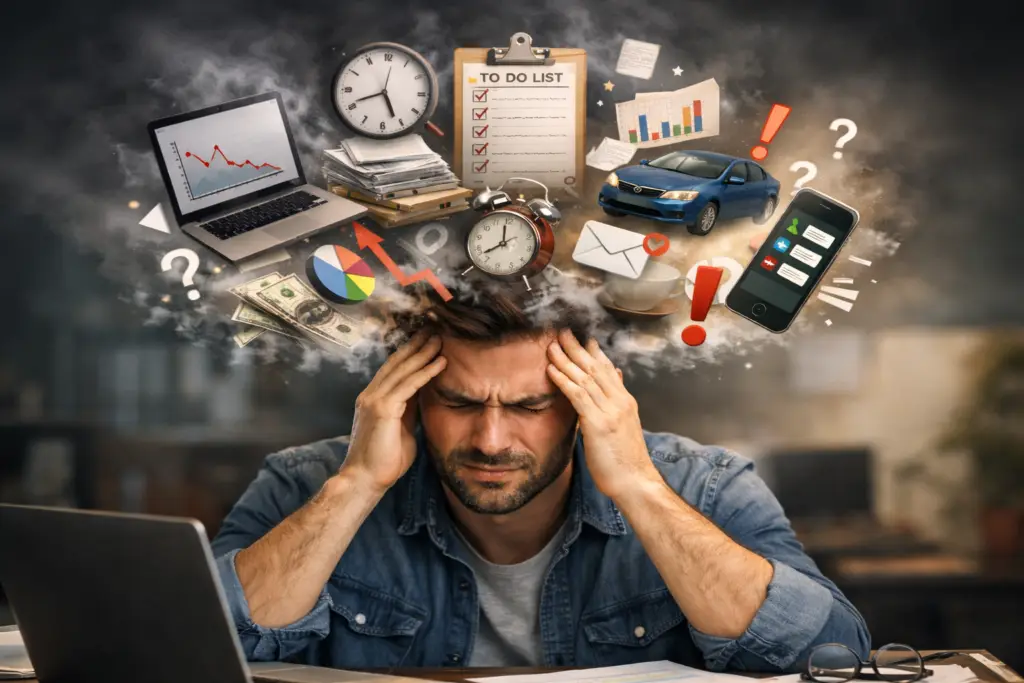
Overstimulation is a state in which the nervous system becomes overloaded by too many stimuli – sounds, images, information, emotions, notifications, conversations, responsibilities, and decisions. The human brain is designed to process a huge amount of data, but it has limits. When the amount or intensity of stimuli exceeds the body’s adaptive capacity, cognitive and emotional overload occurs. In practice, this means mental fatigue, irritability, reduced concentration, sleep problems, and sometimes even physical symptoms.
Modern lifestyle promotes overstimulation more than ever before. Our brains are almost constantly switching between tasks: work, phone, messages, social media, noise, multitasking. Every notification, screen scroll, or rapid context switch requires a small mental effort. Over time, this constant informational “noise” leads to attention overload and reduced ability to recover. The American Psychological Association (APA) defines information overload as a state in which the amount of incoming information exceeds the ability to process it, which may lead to tension, frustration, and mental exhaustion.
The brain is one of the most energy-demanding organs in the body – although it makes up only a small percentage of body weight, it uses a significant portion of resting energy. That is why it copes poorly with chronic stress, sleep deprivation, and excessive stimulation. When the nervous system is constantly activated, cortisol and adrenaline levels rise, and the body finds it increasingly difficult to enter recovery mode. As a result, you may feel constantly “switched on” while also being mentally drained. Chronic cognitive overload is associated with poorer concentration, weaker working memory, greater impulsivity, and difficulty making decisions.
One of the most common symptoms of overstimulation is so-called brain fog – a feeling of mental cloudiness. This is a state in which thinking becomes slower, it is harder to organize thoughts, distraction increases, memory lapses appear, and there is a sense of mental overload. Many people mistakenly interpret this as laziness, lack of discipline, or “weak mentality.” In reality, it is often a natural response of the brain to chronic strain. Under stress and overload, the brain begins conserving resources – limiting less urgent processes such as deep concentration, creativity, and flexible thinking.
Digital media play a particularly important role here. Studies show that excessive screen and social media use can increase mental fatigue, worsen sleep quality, and lower psychological well-being. The problem is not only the time spent in front of screens, but also how we use them – constant attention switching, short bursts of stimulation, comparing ourselves to others, and a lack of real breaks for the nervous system. Research reviews indicate that information overload and so-called social media fatigue are linked to greater psychological tension, anxiety, and reduced concentration.
Overstimulation does not affect only “sensitive” people. Of course, some individuals may be more vulnerable – for example, people with ADHD, anxiety disorders, high sensory sensitivity, or a history of prolonged stress. However, overload can affect anyone if they function for too long without proper recovery. Typical symptoms include irritability, difficulty relaxing, muscle tension, headaches, unexplained anxiety, a need for isolation, trouble falling asleep, and even heart palpitations. Sensory overload can trigger a physiological stress response – faster heart rate, sweating, tension, and a feeling of being overwhelmed.
The good news is that overstimulation does not mean you have a “broken brain.” It is a signal that your nervous system needs to regain balance. The key is reducing the number of stimuli and rebuilding your ability to recover. In practice, this may include limiting notifications, taking intentional breaks from your phone, maintaining regular sleep hours, spending time in nature, physical activity, breathing techniques, mindfulness, and learning to do one thing at a time. Even short breaks from the constant flow of information can improve concentration, mood, and sense of control. Studies on reducing phone use show that improvements in attention and well-being can appear after just a couple of weeks.
It is also worth remembering that chronic overstimulation can mask other health issues – such as iron deficiency, vitamin B12 deficiency, sleep disorders, anxiety disorders, depression, or ADHD. If the feeling of overload lasts a long time, worsens, or begins to interfere with daily functioning, it is worth consulting a specialist. Sometimes the problem is not simply “having too much on your plate,” but a genuine overload of the nervous system that requires support.
To sum up: overstimulation is not just a trendy internet term, but a real state of psychophysical overload. In a world that constantly demands our attention, the ability to rest and protect your nervous system is becoming a foundation of health – just as important as sleep, diet, and exercise.
Patient FAQ
Can you be overstimulated even if you enjoy an intense, busy lifestyle?
Yes. Liking a fast pace and being active does not mean your nervous system has no limits. Overload can also affect highly functional people.
How do I know whether I need rest or professional help?
If symptoms persist for weeks and affect your sleep, work, relationships, or overall well-being, it is worth consulting a psychologist or doctor. This is not a sign of weakness, but of taking care of your health.
Why do I sometimes feel worse after a vacation instead of better?
Because it is often only when you slow down that your body begins to feel how overloaded it has been. This is the moment when tension drops and symptoms become more noticeable.
Can overstimulation affect appetite and digestion?
Yes. Chronic activation of the nervous system can affect the gut, appetite, cause nausea, a feeling of tightness in the abdomen, and may worsen symptoms of irritable bowel syndrome.
Why do small things sometimes feel more exhausting than major problems?
Because with overload, it is often not one major stressor that is hardest to handle, but the accumulation of many small daily stimuli that gradually burden the nervous system.
Bibliography:
American Psychological Association. Information overload
American Psychological Association. Media overload and mental health
Kunasegaran K et al. Understanding mental fatigue and its detection, 2023
Zheng H et al. Drivers of social media fatigue, 2021
Qin C et al. Effects of social media fatigue, 2024
Cleveland Clinic. Sensory overload
Medical News Today. Sensory overload
Washington Post / PNAS Nexus coverage on reduced phone use and cognition, 2026