
Reduced libido, chronic fatigue, erectile dysfunction, or loss of muscle strength may accompany testosterone deficiency. However, similar symptoms can also occur with obesity, sleep disorders, depression, chronic illnesses, and the use of certain medications. Moreover, a single low testosterone result is not sufficient to diagnose hypogonadism. So how should testosterone be tested correctly, what should be investigated when the result is abnormal, and when is treatment actually necessary?
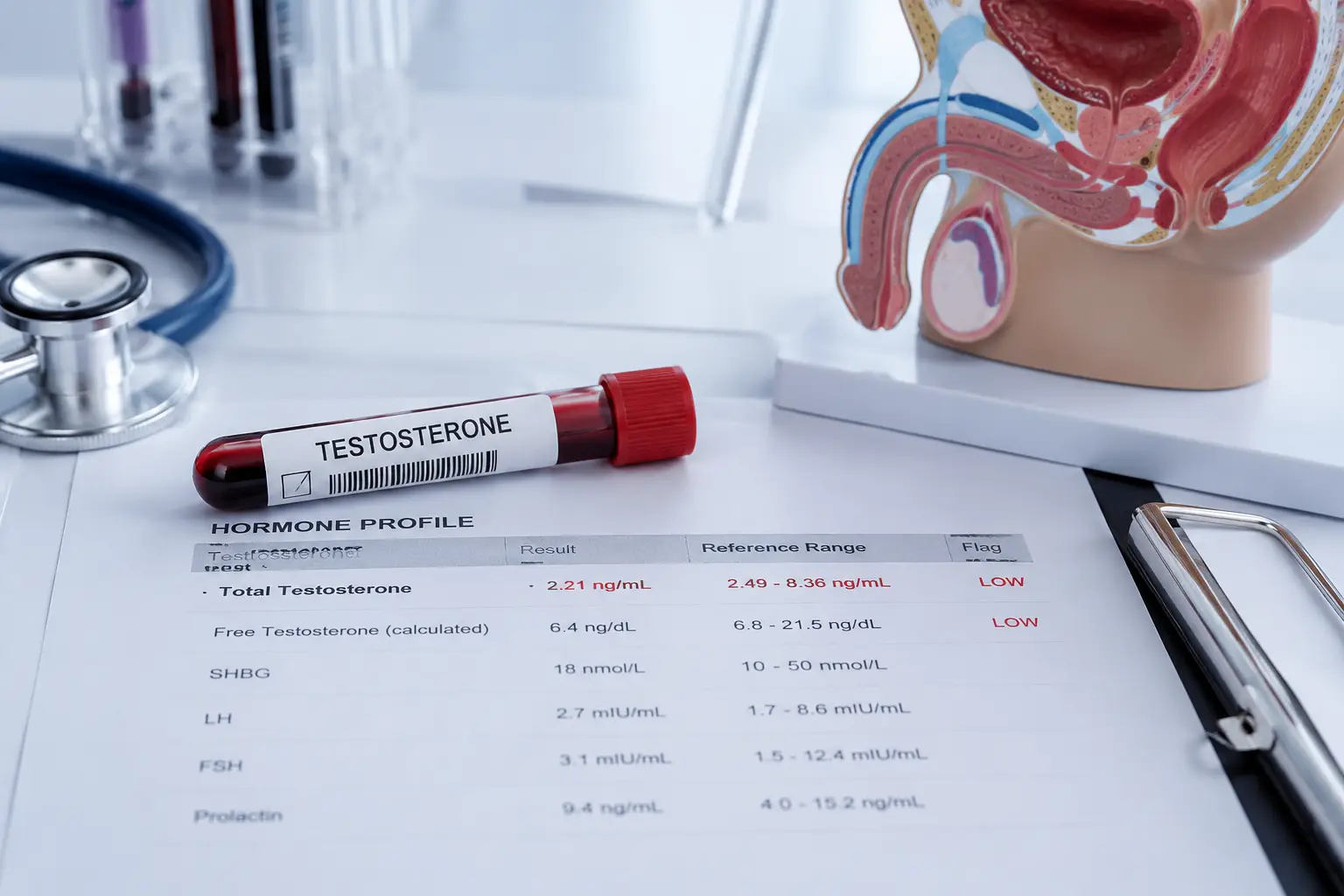
Testosterone is the most important androgen in men. It plays a role in sexual function, spermatogenesis, muscle mass and strength, bone health, and red blood cell production. Testosterone deficiency may cause reduced libido, fewer spontaneous and morning erections, erectile dysfunction, decreased energy levels, and reduced muscle strength. Long-term hypogonadism may also lead to changes in body composition and reduced bone mineral density.
However, most of these symptoms are not specific to testosterone deficiency. Fatigue, poor concentration, low mood, or sexual problems may have many other causes. Among the symptoms associated with hypogonadism, disturbances in sexual function are particularly important from a diagnostic perspective.
Testosterone production is regulated by the hypothalamic–pituitary–gonadal axis. The hypothalamus releases GnRH, which stimulates the pituitary gland to produce LH and FSH. LH stimulates Leydig cells in the testes to produce testosterone, while FSH, together with testosterone, participates in the regulation of spermatogenesis. Therefore, the underlying problem may be located in the testes themselves or higher up, at the level of the pituitary gland or hypothalamus. This has practical significance because a low testosterone result is often the beginning of the diagnostic process rather than its conclusion.
A single low testosterone result is not sufficient to diagnose hypogonadism. Testosterone levels fluctuate throughout the day and from one day to another, and the conditions under which the test is performed may also affect the result. According to European guidelines, total testosterone should be measured in the morning, usually between 7:00 and 10:00 a.m., while fasting. If the result is low, it should be confirmed with another morning measurement. Testosterone deficiency should also not be diagnosed based on a test performed during an acute illness, as testosterone levels may be temporarily reduced under such circumstances.
SHBG, or sex hormone-binding globulin, is also important. Most testosterone circulating in the blood is bound to proteins, which means that changes in SHBG levels can affect total testosterone measurements. This is particularly relevant in men with obesity, in whom SHBG levels are often reduced. Conversely, SHBG levels may increase with age and in certain medical conditions, including hyperthyroidism. When total testosterone is borderline or when factors affecting SHBG are present, a doctor may take SHBG levels and appropriately assessed free testosterone into account.
Obesity is one of the most common factors associated with low testosterone. Excess adipose tissue, particularly visceral fat, is associated with metabolic and hormonal changes that may disrupt the hypothalamic–pituitary–gonadal axis. In addition, obesity frequently lowers SHBG levels, which may result in reduced total testosterone. In some men, this condition is functional and may be at least partially reversible.
Weight loss may lead to an increase in testosterone levels. Therefore, in cases of hypogonadism associated with overweight or obesity, lifestyle modification and treatment of metabolic disorders are important components of management. However, this does not mean that every low testosterone result in a man with obesity can automatically be attributed to excess body weight. Obesity may coexist with a disorder of the testes or pituitary gland.
Other factors may also affect testosterone levels. Chronic diseases, metabolic disorders, excessive alcohol consumption, a significant energy deficit, and certain medications may all play a role. Chronic opioid use is a particularly important example, as opioids may suppress the hypothalamic–pituitary–gonadal axis and lead to secondary hypogonadism. Glucocorticoids may have a similar effect. Therefore, when testosterone levels are abnormal, the patient’s entire medication regimen should be reviewed, rather than focusing only on supplements or hormonal medications.
Sleep disorders require separate consideration. A man with obesity, loud snoring, pauses in breathing during sleep, morning headaches, and excessive daytime sleepiness may have obstructive sleep apnea. Chronic fatigue and impaired functioning may then be incorrectly attributed solely to low testosterone. Similarly, reduced libido, lack of energy, and difficulty concentrating may occur in depression. Hormonal test results should always be interpreted together with the patient’s symptoms and other health conditions.
Low testosterone may, however, be a genuine sign of disease. Primary hypogonadism may result from testicular damage, a history of testicular torsion or orchitis, chemotherapy, radiotherapy, or genetic disorders such as Klinefelter syndrome. In secondary hypogonadism, the problem involves the hypothalamus or pituitary gland. Possible causes include hyperprolactinemia, pituitary tumors, iron overload, and other disorders affecting the hormonal axis.
For this reason, once low testosterone has been confirmed, LH and FSH measurements are particularly useful. Low testosterone accompanied by elevated gonadotropins suggests a problem involving the testes. If testosterone is low while LH is low or inappropriately normal, secondary hypogonadism should be considered.
Depending on the clinical situation, SHBG and free testosterone may also be assessed, together with prolactin levels. The scope of further diagnostic testing depends on the results, symptoms, and coexisting medical conditions. In selected patients, assessment of other pituitary hormones may be required, and in some cases, magnetic resonance imaging (MRI) of the pituitary gland may be indicated.
Not every man with low testosterone therefore requires testosterone replacement therapy (TRT). TRT is primarily indicated in patients with symptomatic and properly confirmed hypogonadism, after determining its cause and assessing potential contraindications. In men with genuine testosterone deficiency, treatment may improve libido and some other symptoms associated with androgen deficiency.
Administering testosterone to a man with normal testosterone levels, however, is not a treatment for nonspecific fatigue or a way to increase a result that happens to be at the lower end of the normal range.
Before starting TRT, fertility plans are extremely important. Exogenous testosterone suppresses pituitary secretion of LH and FSH and can therefore significantly reduce sperm production. In some men, treatment may even result in azoospermia, meaning the absence of sperm in the ejaculate. Testosterone is therefore not used as a treatment for male infertility, and men planning to have children should inform their doctor before starting therapy.
TRT also requires ongoing monitoring. Testosterone may increase red blood cell production and lead to an elevated hematocrit, which is why a complete blood count is one of the tests monitored during treatment. Depending on the patient’s age and individual risk factors, prostate assessment and the clinical response to therapy may also need to be monitored. The goal of treatment is not to achieve the highest possible testosterone concentration but to treat a confirmed deficiency while maintaining safety.
Testosterone levels also change with age, but age itself is not a diagnosis of hypogonadism. There is no basis for routinely starting testosterone therapy in every man over the age of 40 or 50 simply because of fatigue or because his testosterone level is lower than it was when he was younger. Diagnosis still requires characteristic symptoms together with repeatedly low testosterone levels.
Low testosterone may therefore result from disease of the testes or pituitary gland, but it may also accompany obesity, chronic illnesses, metabolic disorders, or the use of certain medications. Before starting treatment, testosterone deficiency should be confirmed and its underlying cause established. Some men will require hormonal treatment, while for others, weight loss, treatment of the underlying condition, or modification of factors affecting hormonal balance may be more important.
Patient FAQ
Should every man over the age of 40 have his testosterone level checked?
No. Routine testosterone testing in all asymptomatic men is not recommended. Measuring testosterone is primarily useful when symptoms are present or when there are clinical circumstances that increase the likelihood of hypogonadism.
Can testosterone make the testicles smaller?
Exogenous testosterone suppresses the body’s own production of gonadotropins and, consequently, testosterone production within the testes and spermatogenesis. Over time, this may lead to a reduction in testicular volume. Testosterone therapy may also significantly reduce sperm production.
Can low testosterone increase anxiety or irritability?
Low testosterone may coexist with increased irritability, low mood, reduced energy, and a general decline in well-being. Its relationship with anxiety is less clear, and these symptoms may have many other possible causes, including chronic stress, depression, anxiety disorders, and sleep problems. Therefore, significant anxiety or irritability should not be attributed to low testosterone solely on the basis of a laboratory result.
Can low testosterone cause osteoporosis?
Yes. Long-term hypogonadism may lead to reduced bone mineral density and increase the risk of osteoporosis and fractures.
Can you take testosterone while trying to conceive?
Generally, this is not recommended. Exogenous testosterone suppresses LH and FSH secretion, which can significantly reduce sperm production and, in some men, may even cause temporary azoospermia. Men planning to have children should inform their doctor before starting TRT. In cases where hypogonadism coexists with fertility plans, other treatment approaches aimed at preserving or stimulating spermatogenesis may be considered in appropriate clinical situations.
References:
Bhasin S, Brito JP, Cunningham GR, et al. Testosterone Therapy in Men With Hypogonadism: An Endocrine Society Clinical Practice Guideline. Journal of Clinical Endocrinology & Metabolism. 2018;103(5):1715–1744.
European Association of Urology. EAU Guidelines on Sexual and Reproductive Health – Male Hypogonadism.
European Association of Urology. EAU Guidelines on Sexual and Reproductive Health – Male Infertility.
Corona G, Goulis DG, Huhtaniemi I, et al. European Academy of Andrology (EAA) guidelines on investigation, treatment and monitoring of functional hypogonadism in males. Andrology. 2020.
Endocrine Society. Statement on Testosterone Replacement Therapy. 2026.