
Childhood cancers are relatively rare. According to the World Health Organization, approximately 400,000 children and adolescents aged 0-19 are diagnosed with cancer worldwide each year. The most common childhood cancers include leukemias, cancers of the central nervous system, and lymphomas. Children may also develop solid tumors that are particularly characteristic of this age group, such as neuroblastoma and Wilms tumor, while lymphomas and bone cancers, among others, become increasingly important during adolescence.
Cancers that develop in children differ in many respects from those occurring in adults. In adults, numerous well-established risk factors are known to increase the likelihood of developing cancer, including tobacco use, alcohol consumption, obesity, and long-term exposure to certain carcinogens. In children, cancer is generally not a consequence of lifestyle. The causes of most childhood cancers remain unknown, and only a small proportion are associated with a specific genetic predisposition. For this reason, most childhood cancers cannot currently be effectively prevented using the same approaches employed in adult cancer prevention.
Another challenge is the lack of simple screening tests that could routinely be performed in all healthy children. There is no pediatric equivalent of mammography or colorectal cancer screening. In practice, careful assessment of symptoms and timely diagnostic evaluation therefore play a crucial role when symptoms begin to differ from the typical course of common childhood illnesses.
One example is leukemia, which can interfere with the normal production of blood cells in the bone marrow. A child may become noticeably pale and weak, tire more easily, develop fever, experience recurrent infections, or complain of bone or joint pain. A low platelet count may lead to easy bruising, petechiae, or bleeding from the nose or gums. A single bruise in an active child is, of course, not a characteristic sign of cancer. Greater attention should be paid to multiple bruises that appear without an obvious injury, particularly when accompanied by paleness, weakness, fever, or other concerning changes.
Enlarged lymph nodes should be interpreted in a similar way. They are extremely common in children and are most often associated with infections. A lymph node that gradually increases in size, persists for an extended period, feels hard, is relatively immobile, or is located in an unusual area should be assessed by a doctor. Supraclavicular lymph nodes deserve particular attention, as do situations in which enlarged lymph nodes are accompanied by unexplained fever, weight loss, significant night sweats, or a noticeable deterioration in the child’s general condition.
Brain tumors and other tumors of the central nervous system may present differently. Symptoms depend on the child’s age, the location of the tumor, and how quickly it is growing. They may include persistent or worsening headaches, nausea and vomiting, problems with balance, walking, or vision, behavioral changes, declining school performance, or seizures. In younger children, loss of previously acquired developmental skills may also be a warning sign. Headaches are, of course, among the most common complaints and, on their own, are rarely a sign of cancer. What matters is their pattern – particularly the development of new neurological symptoms, progressively worsening pain, or persistent vomiting occurring alongside the headaches.
Some cancers may first become apparent as a palpable mass or an increase in abdominal size. Wilms tumor develops in the kidney and may sometimes be noticed accidentally while bathing or dressing a child. Neuroblastoma can develop in the abdomen, among other locations, and may cause pain, a palpable mass, loss of appetite, or weight loss. Any new, unexplained lump or mass noticed in a child should be evaluated by a doctor, even if it is painless.
It is also important to pay attention to persistent bone pain. Children frequently complain of leg pain after exercise, injury, or intense physical activity. Pain that repeatedly returns, progressively worsens, remains localized to one area, wakes the child at night, or begins to interfere with walking and normal daily activities should be approached differently. Such symptoms have many possible causes, most of which are not cancer-related, but they may require further evaluation.
There is also a symptom that may sometimes be noticed in an ordinary photograph taken with a smartphone. A white or yellowish pupil appearing instead of the typical red reflex, particularly when repeatedly visible in photographs of the same eye, may be one of the signs of retinoblastoma – a rare eye cancer that primarily affects young children. Not every difference seen in a photograph indicates disease, as a similar effect can result from the angle of the light. However, recurrent leukocoria requires prompt ophthalmological assessment.
When considering symptoms that may occur in cancer, time and context are extremely important. A fever during an infection, a bruise after a fall, or a few days of leg pain following sports should not automatically raise concerns about cancer. The situation is different when a symptom does not resolve as expected, gradually worsens, repeatedly returns without an explanation, or when several concerning symptoms occur together. Parents may also notice a more general change – a child who was previously active becomes persistently tired and pale, loses their appetite or weight, or no longer has the energy for their usual activities.
The presence of these symptoms alone is not enough to diagnose cancer. Diagnostic testing is selected according to the clinical presentation. Sometimes the first steps are a physical examination and a complete blood count with a differential. In other situations, imaging studies, an ophthalmological examination, or specialist consultation may be required. If there is a greater suspicion of cancer, further investigations may include ultrasound, magnetic resonance imaging (MRI), computed tomography (CT), bone marrow examination, or biopsy of a lesion. There is no single blood test that can reliably “rule out all cancers” in a child.
Despite the seriousness of a cancer diagnosis, modern pediatric oncology achieves very good treatment outcomes. According to the WHO, more than 80% of children with cancer can be cured in high-income countries. Outcomes naturally vary depending on the type of cancer, its stage, and other factors. At the same time, major global inequalities remain. In many low- and middle-income countries, cure rates are considerably lower because of delayed diagnosis, limited access to diagnostic services and treatment, interruptions in therapy, and insufficient availability of essential medicines.
Treatment depends on the type of cancer and may include chemotherapy, surgery, radiotherapy, immunotherapy, targeted therapies, or hematopoietic stem cell transplantation. Increasing attention is also being given to what happens after treatment has ended. A child who has been cured of cancer may have many decades of life ahead, which is why monitoring for the long-term effects of treatment is important. These may involve, among other things, cardiovascular health, the endocrine system, fertility, hearing, cognitive function, and the risk of subsequent cancers.
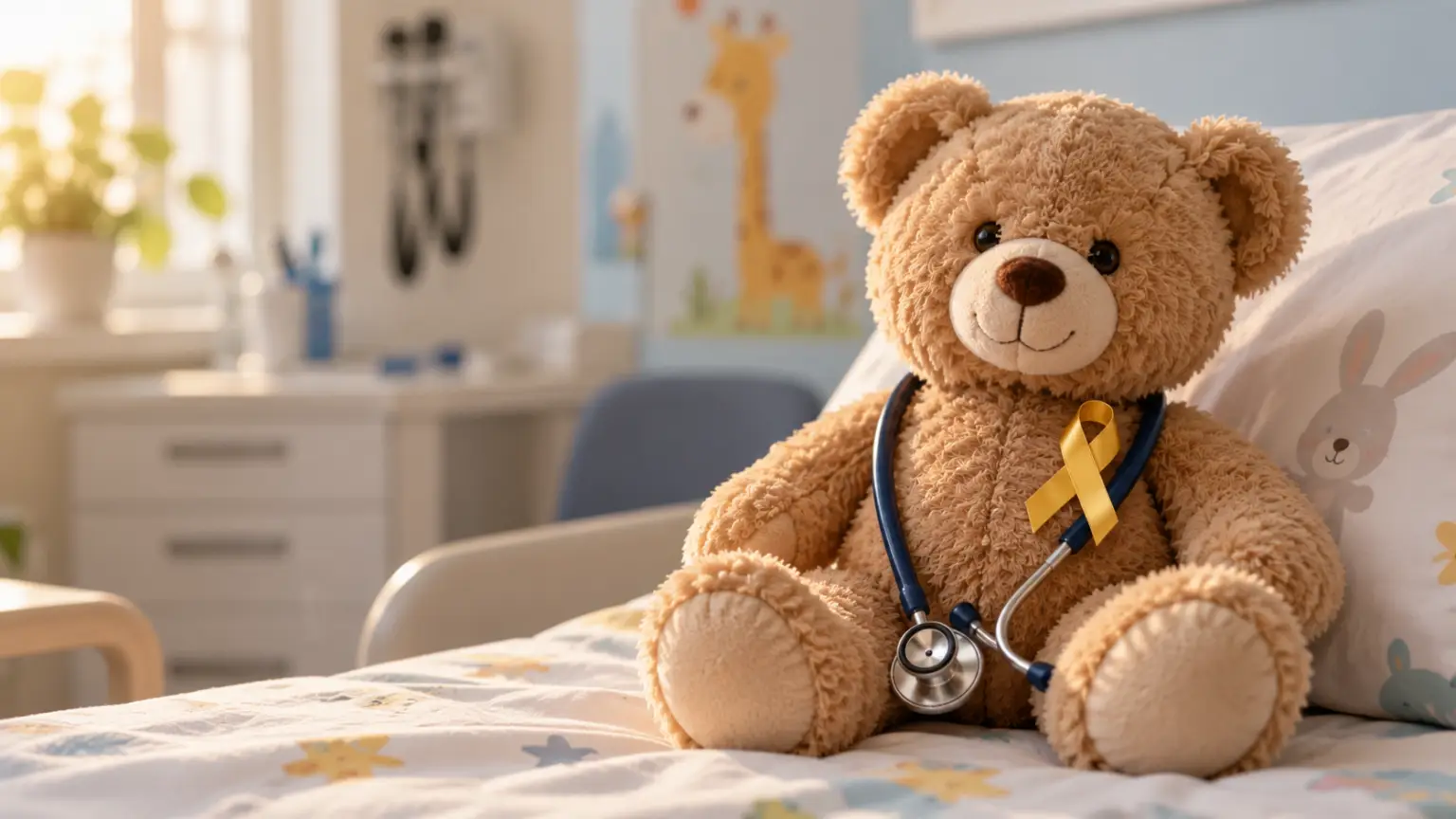
Childhood Cancer Awareness Month, symbolized by the gold ribbon  , should not make parents fear every fever, ache, pain, or bruise. Its purpose is to increase awareness of diseases that are rare but can also occur in previously healthy children. In practice, particular attention should be paid to symptoms that are unusual, unexplained, persistent, or progressively worsening, as well as to a noticeable change in a child’s usual level of functioning. Seeking medical advice promptly does not mean assuming the worst-case scenario – it allows the cause of the symptoms to be identified and, in the rare event of cancer, enables appropriate diagnostic evaluation and treatment to begin as early as possible.