
Schizophrenia is primarily associated with hallucinations, delusions, and a clear loss of contact with reality. However, in some patients, the first changes appear earlier and may initially be difficult to recognize as symptoms of an illness. Someone may begin avoiding friends, struggle more at university or work, neglect everyday responsibilities, lose interest in activities, or simply start behaving differently than before. Family members often notice that something has changed but may be unable to say exactly what has happened.
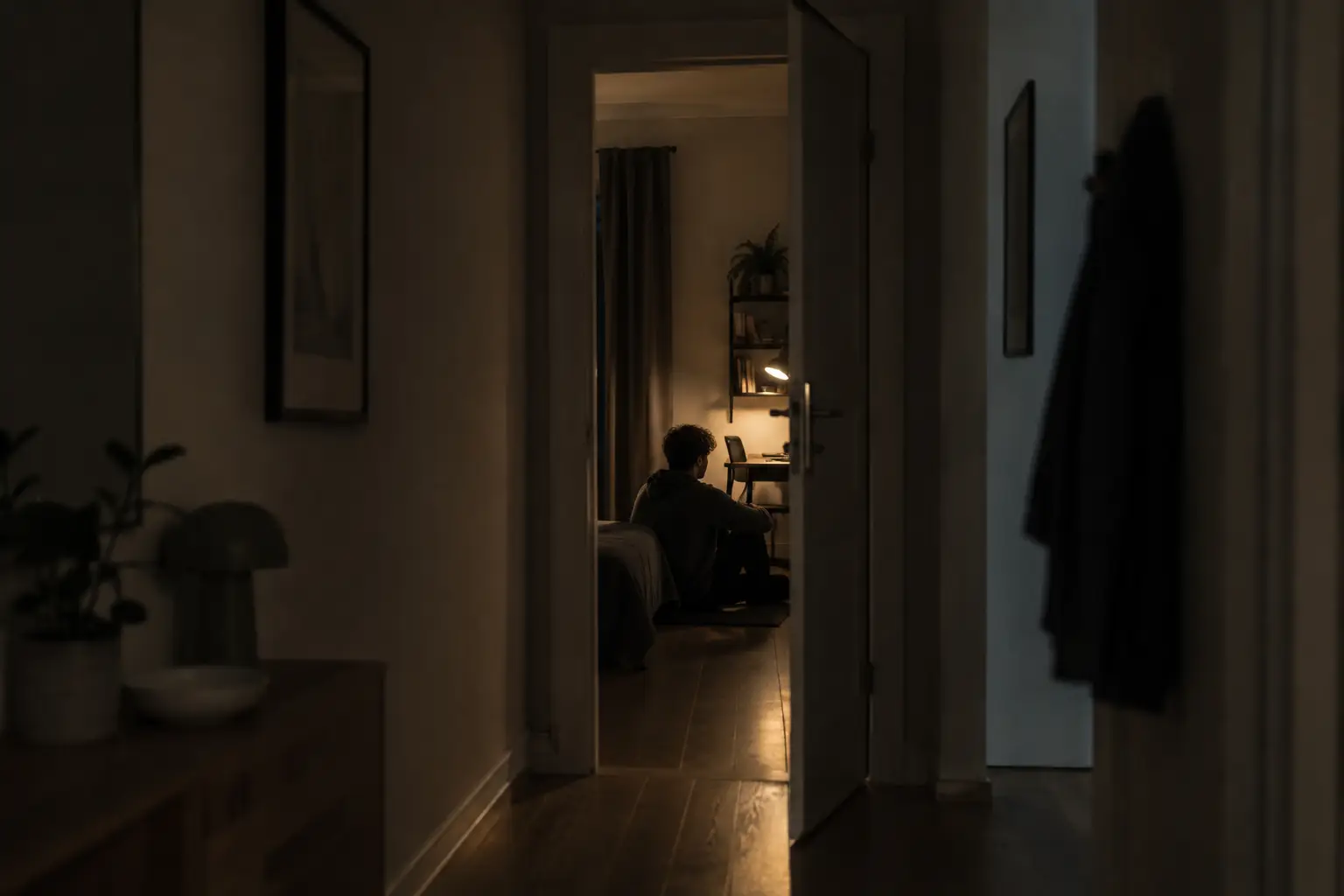
The period preceding the first episode of psychosis is referred to as the prodromal phase. It does not occur in the same way in every patient, and the symptoms observed during this period are nonspecific. This means that they can also occur in depression, anxiety disorders, chronic stress, substance use, or sleep disorders. For this reason, schizophrenia cannot be diagnosed based solely on social withdrawal or impaired concentration.
One of the more characteristic changes is a decline in previous levels of functioning. A person who used to meet friends regularly, work, study, or pursue hobbies may gradually withdraw from these activities. They may spend increasing amounts of time alone, have difficulty completing simple everyday tasks, or stop caring about things that were previously important to them. This is therefore not about having a single bad week, but rather a noticeable change compared with the person’s previous way of life.
Changes may also affect thinking. Problems with concentration, working memory, planning, or organizing everyday activities may develop. Conversation may sometimes become less fluent, and the person’s train of thought may become more difficult to follow. Cognitive impairment is an important component of schizophrenia and can affect education, employment, and independent functioning even when the most visible psychotic symptoms are well controlled.
In some patients, the way they interpret their surroundings begins to change. Random events may start to take on personal significance. A neutral glance from a stranger may begin to seem suspicious, a conversation between people standing several meters away may feel as though it is about the patient, and online content may be perceived as being specifically connected to them. At first, the person may still wonder whether they are misinterpreting the situation. In established psychosis, such beliefs may become fixed and develop into delusions.
Changes may also involve perception. Before clear hallucinations develop, some patients describe more subtle experiences – the impression that someone has called their name, unusual sounds, a sense that the environment feels unfamiliar or unreal, or changes in the intensity of sensory stimuli. These experiences alone are also not sufficient to establish a diagnosis. In psychiatry, the overall clinical picture matters rather than a single unusual symptom.
Less dramatic, but highly significant, are negative symptoms. The patient may show progressively less initiative, start conversations less often, reduce social contact, and express emotions less visibly. Activities that previously brought pleasure may no longer seem interesting. To family members, this can look like laziness, indifference, or a lack of ambition. In reality, avolition, social withdrawal, and reduced emotional expression may be part of the illness. Negative symptoms have a major impact on a patient’s later functioning and should not be dismissed as simply “not wanting to do anything.”
Sleep disturbances are another noteworthy feature of the period preceding psychosis. A reversal of the sleep-wake cycle, staying awake for many hours at night, or a marked reduction in sleep may occur alongside other behavioral changes. Sleep problems themselves are, of course, very common and are usually unrelated to schizophrenia. They become more significant when accompanied by a clear decline in functioning, increasing suspiciousness, or unusual experiences.
Age also matters. Schizophrenia most commonly develops in late adolescence or early adulthood, although it can also begin later in life. On average, the onset of the illness tends to occur earlier in men. This is why a sudden and persistent change in a young person’s functioning, particularly when accompanied by unusual beliefs or perceptual disturbances, deserves closer evaluation.
Cannabis is a separate but important issue. The association between marijuana and psychosis does not mean that every person who uses cannabis will develop schizophrenia. However, research shows an association between cannabis use and an increased risk of psychotic disorders, with the risk rising as exposure becomes more intensive. In people who have already experienced psychosis, continued cannabis use is also associated with a greater risk of relapse and hospitalization.
Another important point is that a first episode of psychosis does not automatically mean schizophrenia. Psychotic symptoms can occur in bipolar disorder, severe depression, after the use of psychoactive substances, in connection with certain medications, and sometimes in the course of neurological or other medical conditions. Diagnosing schizophrenia therefore requires a thorough assessment and observation of how the symptoms develop over time.
The situation changes when clear psychosis develops. Hallucinations, persistent delusions, markedly disorganized speech or behavior, and a significant loss of the ability to accurately assess reality require specialist evaluation as soon as possible. Early intervention is not limited to medication. Modern treatment of first-episode psychosis also includes psychological, family, social, educational, and vocational interventions. NICE guidelines recommend that people experiencing a first episode of psychosis should be assessed without unnecessary delay and have access to comprehensive treatment through early intervention services.
Schizophrenia therefore does not begin according to one specific pattern. For one patient, the first noticeable change may be social isolation; for another, declining academic performance and concentration; and for someone else, increasing suspiciousness. What matters most is not a single symptom, but a change in the person’s overall functioning and how it progresses over time. If changes in behavior are accompanied by disturbances in the perception of reality, unusual beliefs, or a significant decline in everyday functioning, consulting a psychiatrist is advisable. Early assessment does not automatically mean a diagnosis of schizophrenia – it allows clinicians to determine what is actually happening to the patient.
Patient FAQ
Can schizophrenia develop suddenly, from one day to the next?
Yes. Although some people experience gradual changes beforehand, the first clear psychotic episode can develop relatively quickly. A sudden onset of psychosis also requires other possible causes to be ruled out, including psychoactive substances, medications, and medical conditions.
Does a person with schizophrenia know that they are ill?
Not always. During psychosis, the ability to critically evaluate one’s own experiences may be impaired. A patient may be completely convinced that the voices they hear or the persecution they experience are real. For this reason, trying to convince them at all costs that their experiences are not real often does not have the desired effect.
Is schizophrenia hereditary?
Genetics plays an important role, but there is no single “schizophrenia gene.” What is inherited is more accurately described as a vulnerability to developing the disorder, which interacts with numerous biological and environmental factors. Having a parent or sibling with schizophrenia increases the risk, but it does not mean that the person will necessarily develop the illness.
Can schizophrenia be detected on a brain MRI?
No. There is no characteristic MRI finding that can confirm a diagnosis of schizophrenia. Brain imaging is performed in certain situations primarily to rule out other potential causes of the symptoms.
Can schizophrenia be treated without medication?
For a first episode of psychosis, recommended treatment includes a combination of antipsychotic medication and psychological interventions. NICE indicates that psychological therapy used alone is less effective than when combined with pharmacological treatment.
References:
National Institute for Health and Care Excellence. Psychosis and schizophrenia in adults: prevention and management. Clinical Guideline CG178. NICE.
American Psychiatric Association. The American Psychiatric Association Practice Guideline for the Treatment of Patients With Schizophrenia. American Journal of Psychiatry. 2020.
Keepers GA, Fochtmann LJ, Anzia JM, et al. The American Psychiatric Association Practice Guideline for the Treatment of Patients With Schizophrenia. American Journal of Psychiatry. 2020;177(9):868-872.
McCutcheon RA, Reis Marques T, Howes OD. Schizophrenia – An Overview. JAMA Psychiatry. 2020;77(2):201-210.
Owen MJ, Sawa A, Mortensen PB. Schizophrenia. The Lancet. 2016;388(10039):86-97.
Fusar-Poli P, McGorry PD, Kane JM. Improving outcomes of first-episode psychosis: an overview. World Psychiatry. 2017;16(3):251-265.
McGorry PD, Hartmann JA, Spooner R, Nelson B. Beyond the “at risk mental state” concept: transitioning to transdiagnostic psychiatry. World Psychiatry. 2018;17(2):133-142.
Hasan A, von Keller R, Friemel CM, et al. Cannabis use and psychosis: a review of reviews. European Archives of Psychiatry and Clinical Neuroscience. 2020;270:403-412.
D’Souza DC, Sewell RA, Ranganathan M. Cannabis and psychosis/schizophrenia: human studies. European Archives of Psychiatry and Clinical Neuroscience. 2009;259:413-431.
National Institute for Health and Care Excellence. Quality statement 1: Referral to early intervention in psychosis services. Psychosis and schizophrenia in adults. NICE.